How much does a nanny cost in London?
Most London nannies are paid £15.45–£20 gross an hour. On top of that, the family pays employer National Insurance, a pension once pay passes £10,000 a year, and any agency fee. An after-school nanny for 3 afternoons comes to about £229 a week. A full-time nanny costs about £51,220 a year.

The short answer
- Most London nannies are paid £15.45–£20 gross an hour. The London Living Wage is £15.45.
- An after-school nanny for 3 afternoons costs about £229 a week, or £990 a month, all in.
- A full-time nanny on 50 hours costs about £985 a week, or £51,220 a year, plus a one-off placement fee.
- On top of pay you owe 15% employer National Insurance above £96 a week, and a 3% pension once pay passes £10,000 a year.
- A nanny is paid by the hour, not per child, so the cost doesn't double with a second child.
By Richard Goodman, co-founder. Figures for the 2026/27 tax year, updated . Regular-care costs include employer National Insurance, pension and our fees including VAT. One-off bookings show nanny pay plus our booking fee.
| Type of care | Example | Total cost |
|---|---|---|
| After-school nanny | 3 afternoons, 4 hours each, £16 an hour | £229 a week |
| Part-time nanny | 2 days, 10 hours each, £18 an hour | £426 a week |
| Full-time nanny | Monday to Friday, 50 hours, £17 an hour | £985 a week, plus a one-off placement fee |
| Holiday nanny | One week, 10-hour days, £17 an hour | £1,030 for the week |
| Babysitter or emergency cover | One 4-hour booking, £16 an hour | £82 |
Cost by days a week
A typical after-school pattern: a nanny for 4 hours a day at £16 an hour. Totals include employer National Insurance and our membership with VAT. The monthly figure is the weekly total across 52 weeks, divided by 12.
| Days a week | Hours | Nanny pay | Employer NI | Membership | Total a week | Total a month |
|---|---|---|---|---|---|---|
| 1 day | 4 | £64 | £0 | £13.85 | £78 | £337 |
| 2 days | 8 | £128 | £4.80 | £19.38 | £152 | £659 |
| 3 days | 12 | £192 | £14.40 | £22.15 | £229 | £990 |
| 4 days | 16 | £256 | £24 | £27.69 | £312 | £1,351 |
| 5 days | 20 | £320 | £33.60 | £33.23 | £393 | £1,702 |
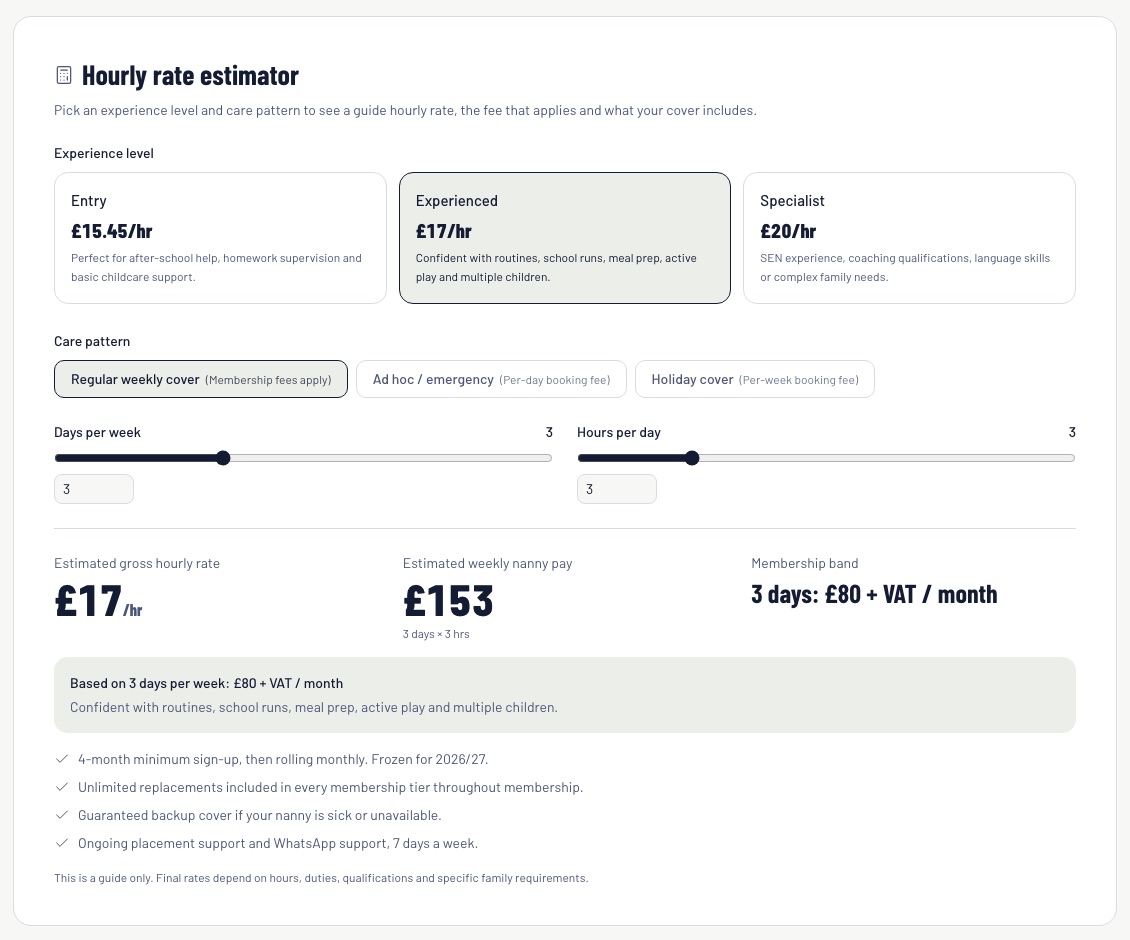
A pension applies from 4 days on this pattern, because pay passes £10,000 a year, and is included. For your own hours and rate, use the cost estimator.
1. Your nanny's pay
Nannies are quoted a gross hourly rate, before tax and their own National Insurance. In London that is usually £15.45–£20 an hour. We recommend £15.45–£18 for entry-level nannies and up to £20 for experienced ones, with more for long hours, several children or extra skills like driving or a second language.
The legal minimum for workers aged 21 and over is the National Living Wage: £12.71 an hour from 1 April 2026, rising to £13.21 on 1 April 2027. Few London nannies work for that. The voluntary London Living Wage, set each autumn by the Living Wage Foundation, rose to £15.45 in October 2026 and is the better guide to what a London nanny expects. Our entry rate matches it.
Always agree pay as a gross figure. If you agree a net figure, you carry the risk when tax rates change.
2. Employer costs
A nanny who works in your home is your employee, so you run payroll for them. Employing a nanny covers the legal steps in order.
- Employer National Insurance: 15% of pay above £96 a week (£5,000 a year). Families can't claim the Employment Allowance against it, because household staff are excluded.
- Workplace pension: if your nanny is 22 or over and earns over £10,000 a year, you enrol them and pay at least 3% of their qualifying earnings.
- Holiday pay: 5.6 weeks a year, pro rata for part-time nannies, paid at their normal rate. See our nanny holiday entitlement guide.
- Payroll and insurance: payslips, HMRC returns and employers' liability insurance. Our membership includes PAYE, National Insurance and pension set-up, and Public Liability Insurance.
3. What your nanny takes home
"Nanny tax" is the informal name for what runs through payroll. Two parts come out of your nanny's gross pay: Income Tax at 20% and employee National Insurance at 8%, both on earnings above £242 a week. The third part, employer National Insurance, is yours to pay on top.
Take the full-time example of 50 hours at £17. Gross pay is £850 a week. On a standard tax code with no pension, your nanny takes home about £680. You pay £985, so the gap between what you pay and what they receive is about £305 a week.
A part-time nanny earning under £242 a week from you, with no other job, usually pays no tax or National Insurance at all. That covers most after-school roles of up to 15 hours at £16.
4. The extras parents forget
- Mileage. If your nanny drives your children in their own car, HMRC's approved rate for 2026/27 is 55p a mile for the first 10,000 business miles. Check their insurance covers business use.
- Sick pay. Statutory Sick Pay is £123.25 a week, or 80% of average weekly earnings if that is lower, and is now paid from the first day of illness. You also need cover: backup care is included in our membership.
- Bank holidays and your own holidays. If you go away and don't need your nanny, they are usually still paid unless the contract counts it as their holiday.
- Activities and food. A small weekly float for swimming, soft play, bus fares and snacks. Agree a limit and ask for receipts.
- Overtime and late nights. Agree the rate for extra hours and babysitting before you need them.
- Insurance. Employers' liability insurance is a legal requirement. Some home policies include it, so check yours.
5. Agency fees
London agencies charge in three main ways: a one-off placement fee (usually a percentage of annual pay), a monthly membership, or an all-in hourly rate that folds the fee into what you pay per hour, as most apps do. Here is exactly what we charge. Our guide to choosing a nanny agency lists the questions to ask any of them.
Membership for regular cover
Per month plus VAT. 4-month minimum sign-up, then rolling monthly. Frozen for 2026/27.
- 1 day a week
- £50
- 2 days a week
- £70
- 3 days a week
- £80
- 4 days a week
- £100
- 5 days a week
- £120
- 6–7 days a week
- £140
Booking and placement fees
- Ad hoc or emergency, 1–4 hours
- £15 + VAT / day
- Ad hoc or emergency, 4+ hours
- £20 + VAT / day
- Holiday or longer bookings, over 1 week
- £150 + VAT / week
- Placement fee, over 20 hours a week Mon–Fri
- 10% + VAT of annual nanny pay
Every membership tier includes unlimited replacements throughout membership.
6. Worked examples
Weekly costs to the family, using 2026/27 rates. Our fees include VAT.
After-school nanny
3 afternoons × 4 hours at £16
- Nanny pay (gross)
- £192
- Employer NI
- £14.40
- Pension
- £0
- Membership, 3 days
- £22.15
- Total a week
- £228.55
Pay is under £10,000 a year, so a pension is optional. About £990 a month.
Part-time nanny
2 days × 10 hours at £18
- Nanny pay (gross)
- £360
- Employer NI
- £39.60
- Pension
- £7.20
- Membership, 2 days
- £19.38
- Total a week
- £426.18
About £1,847 a month.
Full-time nanny
Monday to Friday, 50 hours at £17
- Nanny pay (gross)
- £850
- Employer NI
- £113.10
- Pension
- £21.90
- Total a week
- £985
About £4,268 a month, plus a one-off placement fee of £5,304 (10% of annual pay, plus VAT).
7. Nanny, club or childminder
For school-age children, the Coram Childcare Survey 2026 puts an after-school club at £68.07 a week in Inner London and £72.66 in Outer London, and a childminder to 6pm at £131.57 and £116.95. Those prices are per child.
A nanny is paid by the hour whatever the number of children. With one child, a club or childminder is cheaper than the £229 a week in our 3-afternoon example. With two children in Inner London, two childminder places average about £263 a week, which is more. With three, a nanny is usually the cheapest option as well as the most flexible. We compare them in full in nanny vs after-school club and nanny vs childminder.
8. Ways to bring the cost down
- Tax-Free Childcare. If your nanny is registered with Ofsted, the government adds £2 for every £8 you pay, up to £2,000 a year per child under 12 (£4,000 for a disabled child). You can also use the account to pay their tax and National Insurance.
- Only pay for the hours you need. An after-school nanny covering 3pm–7pm costs a fraction of a full-time nanny if your children are at school all day.
- Share a nanny. In a nanny share, two families split one nanny's pay.
- Hire a student. A vetted university student is often free in the afternoons and paid at the entry end of the range.
- Book holidays and one-offs separately. Holiday nannies and ad hoc babysitters are paid per booking, with no membership.
Common questions
- How much is a nanny in London per hour?
- Most London nannies are paid £15.45–£20 gross an hour. We recommend £15.45–£18 for entry-level nannies and up to £20 for experienced ones. The legal minimum for workers aged 21 and over is the National Living Wage of £12.71 an hour from April 2026, rising to £13.21 in April 2027, but London rates are well above it.
- How much does a nanny cost 3 days a week?
- For an after-school nanny on 3 afternoons of 4 hours at £16 an hour, about £229 a week including employer National Insurance and our membership. For 2 full days of 10 hours at £18 an hour, about £426 a week.
- How much is a nanny per month?
- Multiply the weekly cost by 52 and divide by 12. The 3-afternoon after-school example comes to about £990 a month, and the full-time example to about £4,268 a month.
- How much does a full-time nanny cost in London per year?
- A nanny on 50 hours a week at £17 gross an hour earns £44,200 a year before tax. With employer National Insurance and pension, the family pays about £51,220 a year, plus any agency fee.
- How much is an after-school nanny in London per week?
- For 3 afternoons of 4 hours at £16 an hour, nanny pay is £192 a week. With our membership that comes to around £214 a week, plus £14.40 employer National Insurance.
- What is nanny tax?
- It's the informal name for what an employer pays and deducts through payroll: the nanny's Income Tax and employee National Insurance, which come out of their gross pay, plus employer National Insurance of 15% above £96 a week, which you pay on top.
- Do I have to pay National Insurance for my nanny?
- Yes, if you pay them more than £96 a week (£5,000 a year). As their employer you pay 15% on everything above that. Families can't use the Employment Allowance to reduce this, because it doesn't cover household staff.
- Do I have to give my nanny a pension?
- If they are 22 or over and earn more than £10,000 a year, you must enrol them in a workplace pension and pay at least 3% of their qualifying earnings. Our membership sets up PAYE, National Insurance and pension for you.
- Is a nanny cheaper than a childminder for two children?
- Often, in London. A childminder to 6pm averages £117–£132 a week per child, so two places come to about £234–£263. A nanny is paid by the hour for all your children together.
- Can I use Tax-Free Childcare to pay a nanny?
- Only if your nanny is registered with Ofsted. The government then adds £2 for every £8 you pay in, up to £2,000 a year per child under 12 (£4,000 for a disabled child). Ask us whether the nanny you're matched with is registered.
- How much do nanny agencies charge in London?
- It depends on the model. Traditional agencies usually charge a one-off placement fee, often a percentage of the nanny's annual pay. Apps fold their fee into an all-in hourly rate. We charge a monthly membership from £50 plus VAT for regular part-time cover, booking fees for one-off care, and a 10% plus VAT placement fee for Monday to Friday roles over 20 hours a week.

Written by
Richard Goodman, co-founder of Athlete Mannies & Nannies
Richard studied Sports Science at St Mary's University, Twickenham, and has run at national and international level. He set up the agency in Teddington in 2015 with Ben Coldray, and one of them still takes every first call and interviews every carer in person.
Sources
Statutory figures are for the 2026/27 tax year and were last checked on 24 November 2026. Our own fees are frozen for 2026/27. This guide is general information, not tax advice.
- GOV.UK: Rates and thresholds for employers 2026 to 2027
- GOV.UK: National Minimum Wage and National Living Wage rates
- Living Wage Foundation: the real Living Wage (London rate £15.45, October 2026)
- GOV.UK: Employing someone to work in your home
- GOV.UK: Employment Allowance eligibility
- The Pensions Regulator: automatic enrolment for household employers
- Coram Family and Childcare: Childcare Survey 2026 (school-age childcare costs)
- GOV.UK: Tax-Free Childcare
Read more: Our fees in full · Employing a nanny · All guides